

Reflections from Boost! HorizonCapability is becoming abundant
AI capability is spreading fast with powerful and accessible tools increasingly embedded in everyday workflows. The real question facing leadership teams is no longer whether AI works, but whether it can be trusted.
Only a few years ago, AI felt specialist and technical. Today, it feels almost ubiquitous, from prompt-driven content creation to agentic systems that build and deploy applications in minutes. As one speaker demonstrated, the barrier to entry has fallen dramatically and complex workflows that once took weeks can now be prototyped in hours.
This democratisation is profound. It changes who can build, who can experiment and who can innovate. But when everyone has access to similar foundational models, how can organisations differentiate themselves?
From demo to production: the credibility gap
In the context of customer-facing AI agents, the distinction was made clearly. A pilot can show promise, and a demo can impress, but production environments demand resilience, monitoring and governance.
This is the credibility gap. It is one thing to generate an answer and another to ensure that answer is consistent, explainable and aligned with policy. It is one thing to write code from a prompt, another to integrate that code into regulated, customer-critical systems. Trust has become a technical, operational and cultural capability.
Data as a reputation asset
AI is increasingly becoming the interface between businesses and their customers, which means the quality of the data feeding it has become a matter of brand equity.
One vivid example illustrated how domain-specific context transforms performance. A generic model, given an image of a broken machine part, produced plausible but incorrect recommendations. A different system that was grounded in validated internal documentation identified the correct part and repair path
The lesson from this is straightforward. General intelligence is powerful, but contextual intelligence is decisive.
Organisations that treat their data as an afterthought will struggle. Those that curate, validate and structure their data effectively create a trust layer around AI outputs. That layer is not cosmetic. It is foundational.
In this sense, data maturity is no longer just an analytics question. It is a credibility question.
Governance as an enabler, not a brake
It is tempting to frame governance as the counterweight to innovation but at Boost! Horizon, that narrative was challenged. In highly regulated industries, AI is already live in agentic form, but the challenge is how to supervise it.
The companies making progress are not ignoring risk, they are building mechanisms to manage it. Guardrails, red teaming, contractual controls and clear data boundaries were discussed as practical tools, not theoretical safeguards.
Crucially, leadership ownership was emphasised. AI cannot be delegated entirely to technical teams; it must have a seat at board level. Governance, done well, accelerates deployment and allows businesses to move faster because they understand the boundaries.
Trust as commercial advantage
When AI-powered interfaces become the first point of contact for customers they will judge not just speed or novelty, but reliability. Trust will shift from a marketing promise to an operational reality. If the system hallucinates, misprices or mishandles sensitive data, the brand absorbs the impact immediately. And when AI interfaces consistently deliver accurate, relevant and transparent responses, it enhances the customer experience in a measurable way.
It is no longer enough to say, “We use AI.” The more meaningful statement is, “Our AI works reliably, securely and responsibly at scale.”
Beyond hype
The phrase ‘beyond hype’ surfaced more than once during the day. Artificial intelligence is embedded, shaping product development, customer service, marketing and operations. At Boost! Horizon, the message was clear. The next competitive advantage in AI will not be capability alone.
Credibility is harder to build. It requires investment in data, architecture, governance and culture, and leaders who are willing to engage deeply rather than outsource understanding. In a landscape defined by rapid change, trust will become the most durable differentiator.
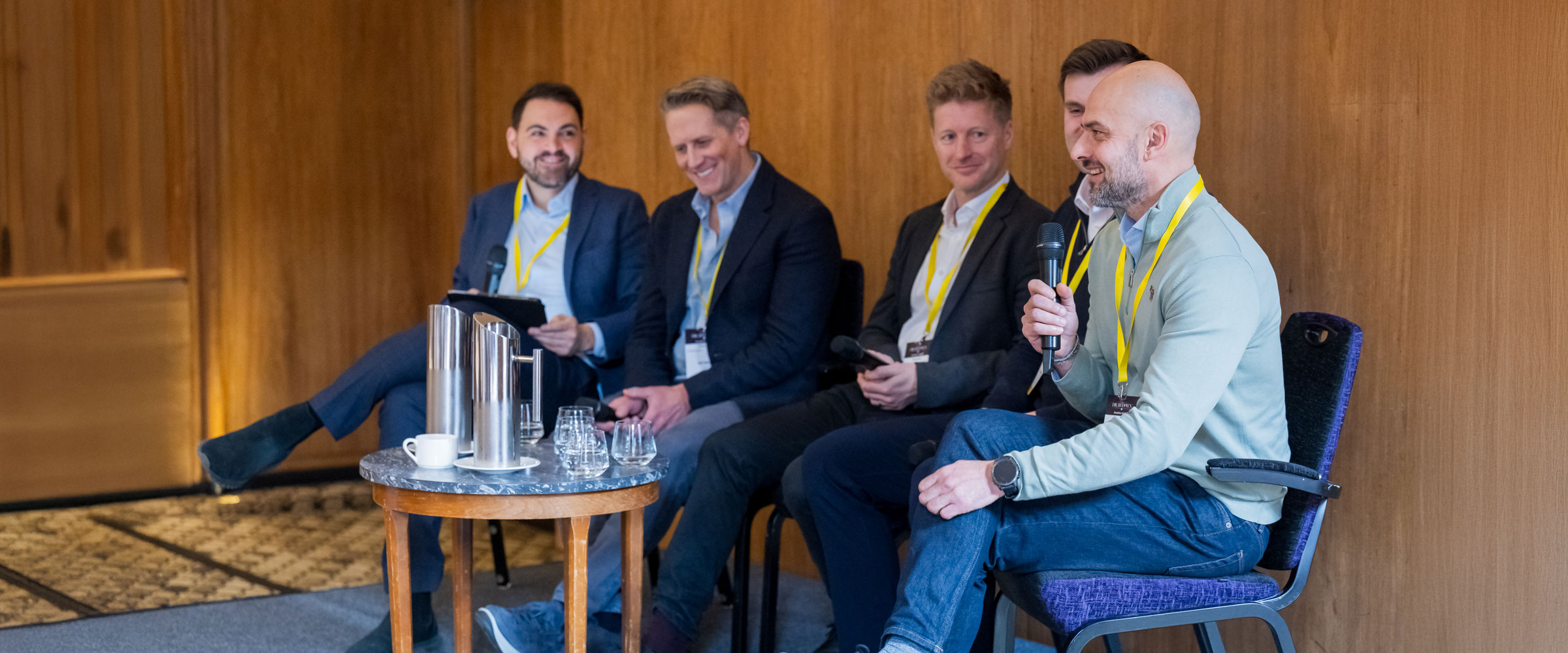
Mayfair’s Boost! programme exists to strengthen connections and unlock value across portfolio businesses. Boost! Horizon was designed specifically for senior leaders and board members across our portfolio to create space for strategic thinking and be a practical forum for the reality of executive decision-making in a world where technological change is no longer incremental, but structural.